


The versatility of agar, the expanding ingredient
As we mentioned earlier in our article ‘How and when agar was discovered’, agar became an important part of the economy of Eastern peoples, with its food use being one of the most widespread and ancient. The hydrocolloids that can be extracted from seaweeds differ depending on their type, allowing for different by-products to be […]
As we mentioned earlier in our article ‘How and when agar was discovered’, agar became an important part of the economy of Eastern peoples, with its food use being one of the most widespread and ancient.
The hydrocolloids that can be extracted from seaweeds differ depending on their type, allowing for different by-products to be obtained. Agar-agar was the first hydrocolloid extracted and used from red algae, especially from the genera Gelidium and Gracilaria.
However, it was not until the mid-19th century that it was presented as a component of great relevance for creating semi-solid culture media in bacteriology, due to its aseptic and solidifying nature.
In the food industry, agar has been used as an ingredient precisely for its gelling, thickening, and stabilizing functions, without altering the smell, taste, or color of the final product.
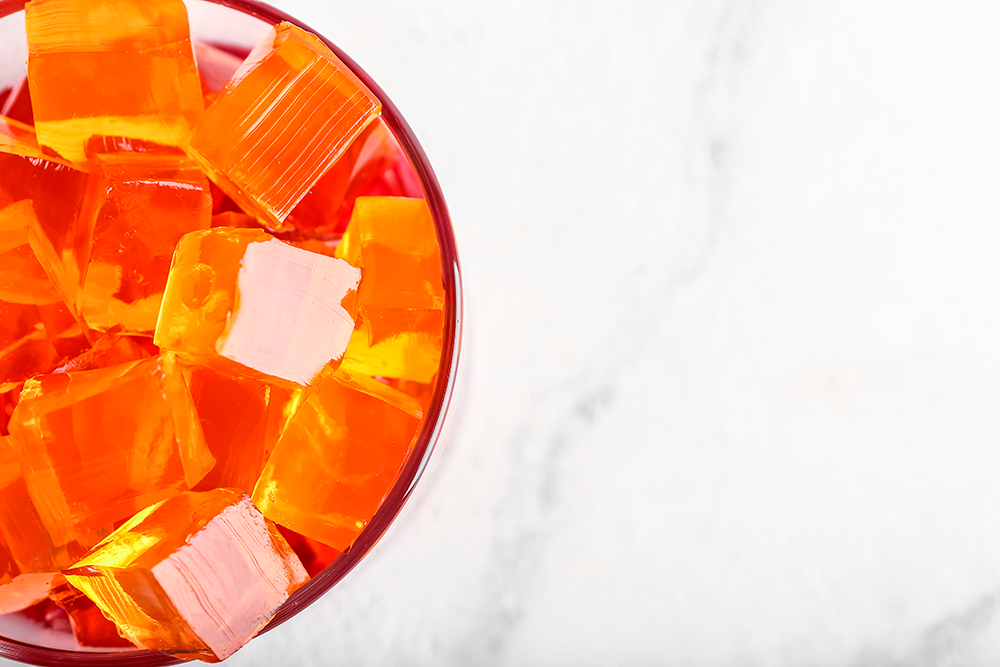
With a concentration five times lower than gelatin, agar forms transparent and compact gels. Additionally, its stabilizing property ensures that food is preserved from production to final consumption, extending its shelf life.
It is the perfect complement to vegetarian diets as it can replace animal gelatin in a multitude of foods and substitute the fat in these thanks to its property of forming microgels, achieving a sensory result very similar to the original.
In the dairy industry, its use continues to increase for the production of dulce de leche, yogurts, flans, and countless other foods to which it provides a homogeneous and creamy texture.
If you want to know more contact our sales team and they will be happy to assist you.
