


The woman who revolutionized microbiology
Did you know that the pioneer of agar in microbiology was a woman? On this International Women’s Day, we remember the discovery of Fanny Angelina Hesse. Fanny was born in 1850 and married Walter Hesse, a German doctor, in 1874. Shortly after their marriage, Walther began working in Robert Koch’s laboratory (later known as […]
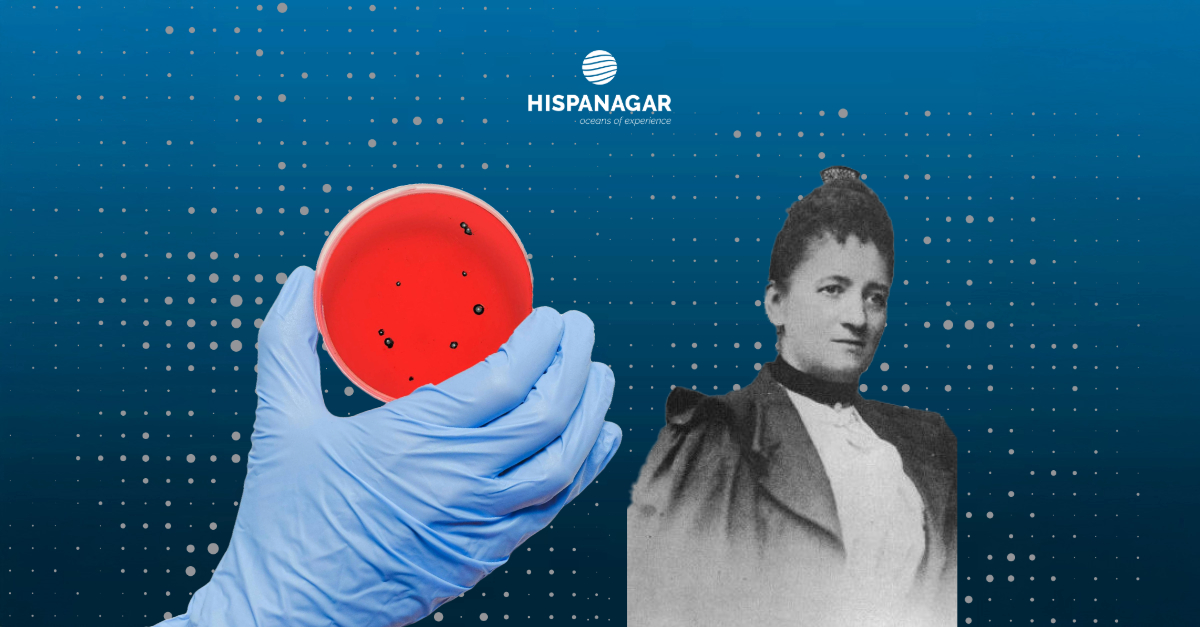
Did you know that the pioneer of agar in microbiology was a woman? On this International Women’s Day, we remember the discovery of Fanny Angelina Hesse.
Fanny was born in 1850 and married Walter Hesse, a German doctor, in 1874. Shortly after their marriage, Walther began working in Robert Koch’s laboratory (later known as the father of microbiology and Nobel Prize winner in Medicine for identifying the tuberculosis bacillus).
Fanny was interested in research and began to help her husband with his work, illustrating his projects. Her illustrations of bacterial colonies at different stages of growth showed an obvious knowledge of bacteriology and microscopy, which she had been acquiring over the years.
Due to the times, Fanny was forced to combine this role of assistant with that of housewife, so she was responsible for household chores, including cooking.
One of Walther’s first projects was to isolate microbes from the air. The culture medium used for this research was gelatin, but this caused great inconveniences.
When Walther told Fanny about his problem, she thought the solution might be in her kitchen. Fanny was born in New York and had neighbors who had lived in Java, Indonesia. They had taught her about an ingredient used in warm climates to make gelatinous textures and as a thickener for broths. Fanny had been using agar in her jams and other desserts for years. Knowing its properties, she thought that this extract could solve Walther’s problem with his culture media.
Walther tried the agar, discovered its benefits, and immediately informed Koch. This is how he began to use agar as a culture medium, and in 1882 he was able to demonstrate that tuberculosis was caused by a bacterium.
Thanks to Fanny Angelina Hesse’s intuitive knowledge, agar is still used today as a culture medium and has allowed for great discoveries that are important for everyone.
Thanks to Fanny and many other women scientists who paved the way, today we celebrate Women’s Day with many other women leading research projects and receiving the recognition they deserve.
