


How did the first culture medium with agar arise?
The cultivation of microorganisms in the laboratory was not always an easy task. Around 1800, the first bacteriologists cultivated microorganisms in foods such as potatoes, coagulated egg whites, and meat. This technique seemed to work, and even later, experiments allowed the transfer of microorganisms to fresh media over and over again. When Robert Koch, a […]
The cultivation of microorganisms in the laboratory was not always an easy task. Around 1800, the first bacteriologists cultivated microorganisms in foods such as potatoes, coagulated egg whites, and meat. This technique seemed to work, and even later, experiments allowed the transfer of microorganisms to fresh media over and over again.
When Robert Koch, a German physician and microbiologist, entered the scene of microbiology, he aimed to improve the cultivation of bacteria, finding gelatin in it, but this presented problems in its own application. At the standard bacterial growth temperature of 37 °C, gelatin liquefied, and even some bacteria began to use it as nutrients. Due to these limitations, gelatin was set aside.
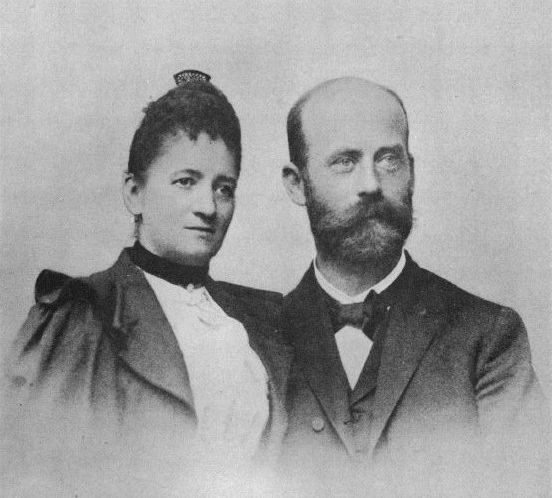
Meanwhile, Angelina Hesse, also known as Fanny Hesse, and Walther Hesse were a German couple of researchers dedicated to microbiological study. Her husband assisted Koch in studying microbial contamination of the air in the laboratory, while Angelina worked from home and even made illustrations for her husband’s research, without receiving any payment or recognition. In one of these illustrations, she came up with the brilliant idea of using agar-agar in bacterial cultivation, a substance originating from Indonesia with which she had come into contact during her childhood, as her neighbors in New York had lived in Java and used it in recipes to make jams and other desserts, being ideal as a gelling agent for warmer climates.
When Fanny told her husband, he immediately went to tell Koch. Agar turned out to be the perfect substance for microbiological cultivation, being solid, transparent, and sterile. Agar was thermally stable and resistant to microbial enzymes. Therefore, Koch published an article about the finding in 1882, but at no point did he mention Angelina Hesse in the article, nor did she receive any recognition or benefit for her contribution.
That is why at Hispanagar we want to dedicate this article to Angelina Hesse for her contribution to microbiology. Thank you very much!
