Animal-Free Peptones Open New Possibilities for Biotechnology
Discover how animal-free peptones support diversification and open new possibilities for the bioprocessing industry.
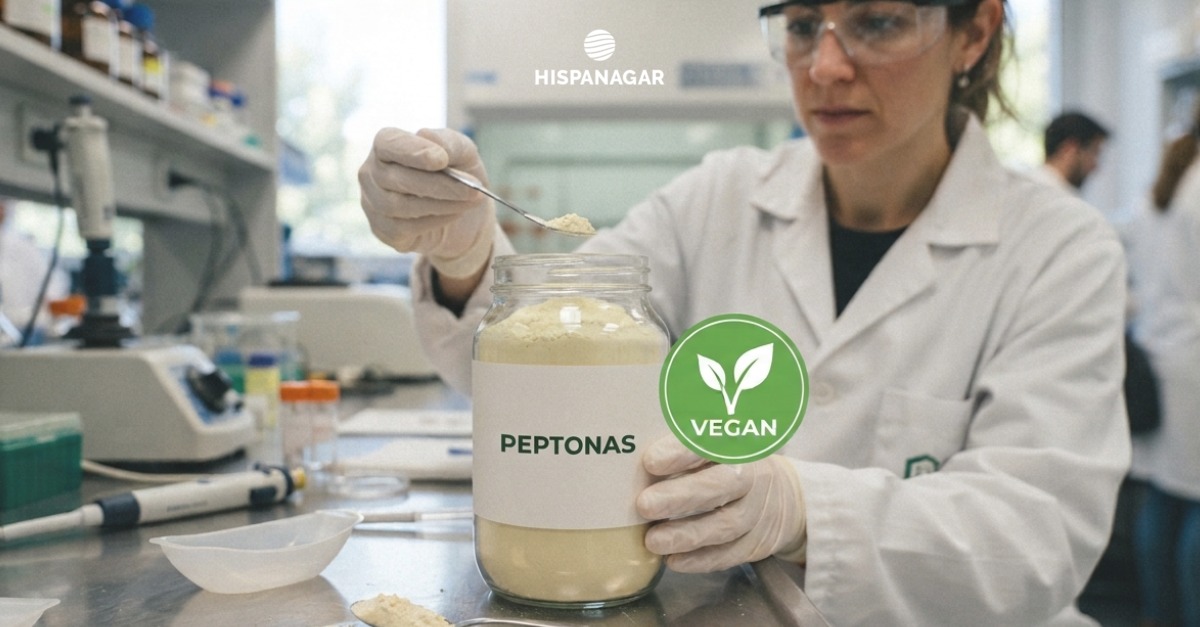
The bioprocessing industry is evolving toward new raw material selection strategies, where traceability, reproducibility, and safety are becoming increasingly important.
In North America, regulatory agencies are paying growing attention to the use of chemically defined and animal-free ingredients to minimize contamination risks and improve batch-to-batch consistency in bioproduction processes.
An Evolution Toward New Alternatives
This transformation does not mean abandoning traditional solutions, but rather moving toward new standards of traceability and reproducibility.
In this context, animal-free peptones are gaining ground as complementary alternatives, expanding the options available for culture media formulation.
Their incorporation allows manufacturers to select the most suitable peptone for each process, considering factors such as regulatory requirements, raw material origin, and specific performance needs.
Diversification, Not Substitution
The evolution of bioprocessing does not necessarily involve replacing one raw material with another, but rather having a wider range of options that provide greater flexibility in production processes.
For manufacturers reviewing their formulations, the direction is clear: diversification, rather than substitution, is shaping the future of bioprocessing.
The question is: Is peptone diversification already part of your culture media formulation strategy?