


The use of agar in the restoration of works of art
The cleaning of the artwork is one of the most complicated processes in restoration and is completely irreversible. Varnishes, adhesives, or dirt must be cleaned while keeping the painting and the support of the work intact. Traditionally, two systems have been used: mechanical and wet. In the wet systems, flour and water pastes were used, […]
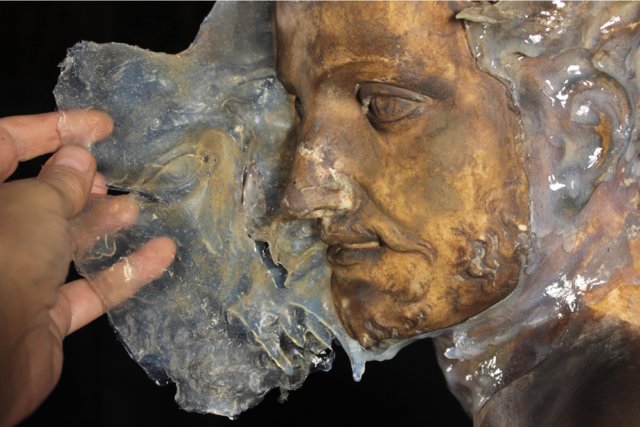
The cleaning of the artwork is one of the most complicated processes in restoration and is completely irreversible. Varnishes, adhesives, or dirt must be cleaned while keeping the painting and the support of the work intact.
Traditionally, two systems have been used: mechanical and wet. In the wet systems, flour and water pastes were used, but the amount of moisture was not controlled and could affect the pictorial layer or the support of the work, especially in plaster sculptures. Nowadays, after various studies in the restoration departments of the most important museums and restoration centers in the world, systems based on agarose and agar are proposed.
By creating a rigid gel with water and agar or agarose, restorers can control the humidity. This gel is applied directly to the surface to be cleaned or on a porous paper. Once placed, it acts as a “molecular sponge” that absorbs any water-soluble material from the surfaces.
Furthermore, due to its limited adhesive power, it is generally not necessary to perform any washing or post-treatment after its use, as is the case with other gelling agents. There are many benefits to using agar: it is thermoreversible, economical, non-toxic, and easy to prepare.
Today, we can enjoy monuments, paintings, and sculptures that have recovered their original appearance thanks to the use of agar and agarose, such as the chapel of San Miguel in the Monastery of Santa María de Pedralbes, paintings from the Thyssen-Bornemisza Museum, or the collection of plaster sculptures at the Gallería d’Arte di Milano.
At Hispanagar, we adapt to the needs of our clients and offer a wide range of agars and agaroses applicable to restoration work.
